

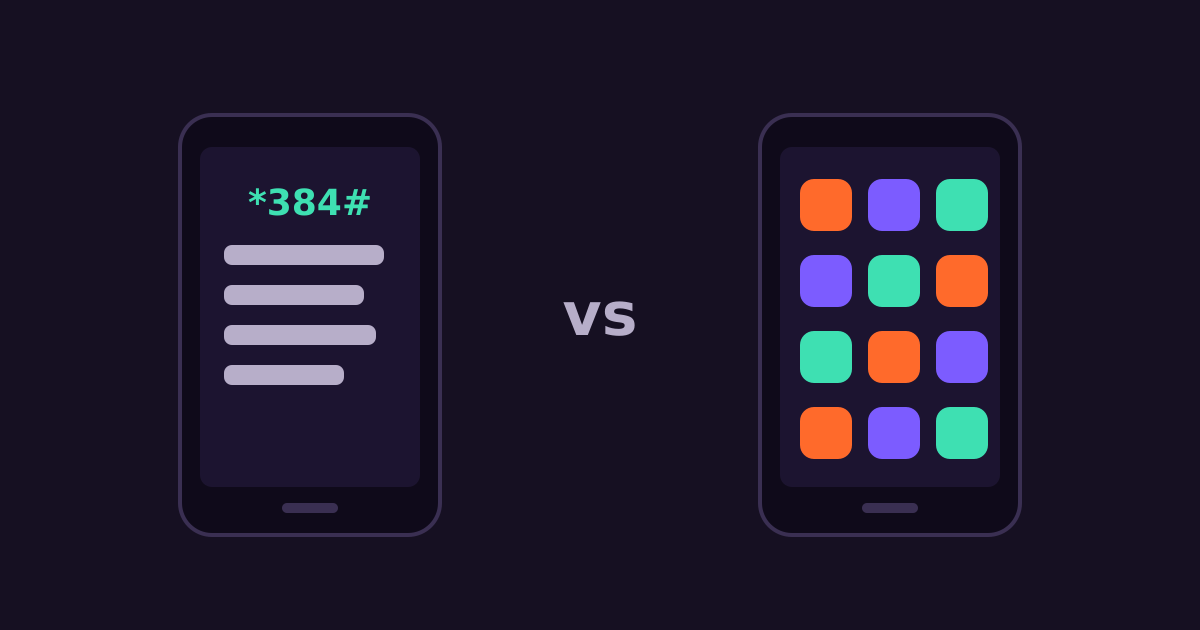
If you’re launching a self-service product in Kenya — for banking, insurance, agriculture or payments — you’ll face this choice early. Apps offer rich experiences; USSD reaches almost everyone. Here’s how they compare.
Reach
USSD works on every GSM phone, including basic feature phones, with no internet, data bundle or download. An app requires a smartphone, storage space, data and the customer’s willingness to install it. In rural areas and lower-income segments, USSD can reach far more of your market.
User experience
Apps win on design: images, maps, long forms, saved sessions and notifications. USSD is text menus with number choices and sessions that time out, so journeys must be short — ideally under five steps.
Cost to build and run
- USSD: faster to build, but you pay for a USSD code and per-session network charges.
- App: higher build and maintenance cost across Android and iOS, plus marketing to drive installs, but no per-session network fees.
Security
Both can be secure. USSD sessions are tied to the SIM, which gives a built-in identity check; add a PIN for sensitive actions. Apps can use biometrics and device binding.
What works best
- USSD first for mass-market financial services, agriculture (mFarming), surveys and utilities.
- App first for smartphone-heavy urban audiences needing rich features.
- Both for banks and SACCOs: USSD for quick balance and transfers, app for everything else. Add SMS for receipts either way.
Learn more about USSD integration and SMS banking.
Get started with Connect Media
Connect Media provides Bulk SMS, USSD and IVR for Kenyan businesses from one dashboard and API. Create an account to start sending, see pricing, or email info@connectmedia.co.ke.
