

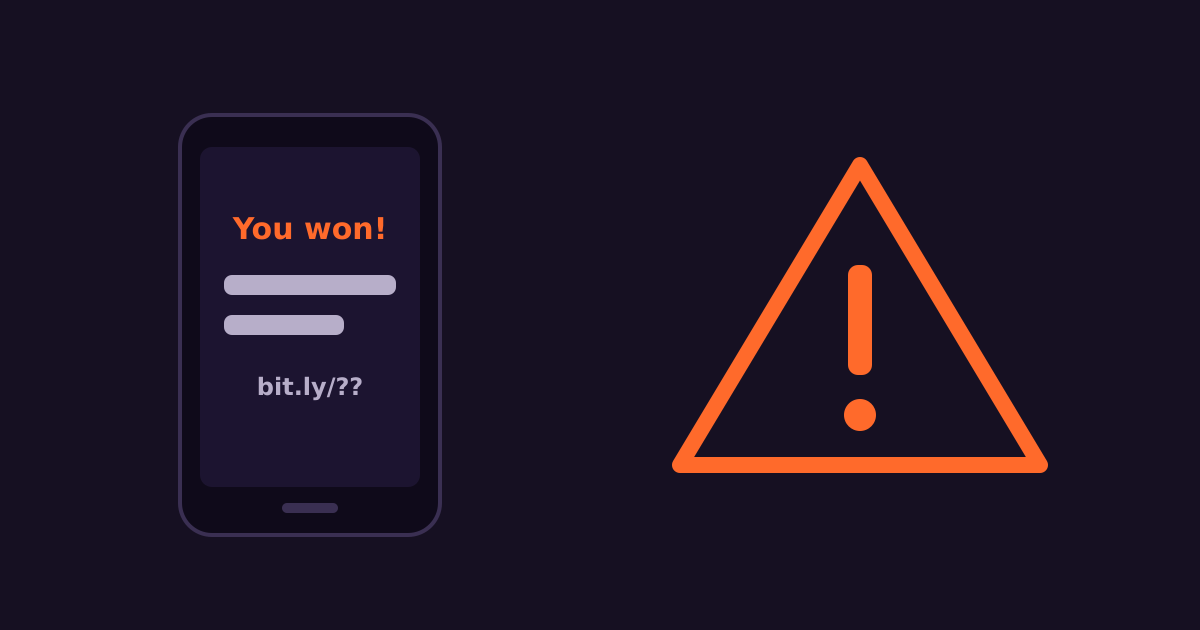
Kenyans receive a steady stream of fake SMS: “wrong” money transfers, prize wins, fake loan offers and messages pretending to be from banks and shops. When scammers use your brand name, your customers lose money and your real messages lose trust.
Common scams
- “Sent to the wrong number”: a fake payment message followed by a request to send the money back.
- Prize and promotion scams: “You’ve won KES 50,000, pay a fee to claim”.
- Fake customer care: messages asking customers to call a number or share a PIN or code.
- Phishing links: fake login or payment pages.
- Loan and job offers that demand an upfront fee.
How to protect your customers
- Use one registered sender ID for all messages, and tell customers it’s the only name you use. See sender IDs.
- Never ask for PINs, passwords or OTPs by SMS or phone — and say so in your messages.
- Avoid links in sensitive messages; where you must use one, use your own domain. See links in SMS.
- Be consistent: same tone, format and details every time, so fakes stand out.
- Publish your official contacts on your website and receipts.
Educate customers
Send an occasional reminder: “BRAND will never ask for your PIN or OTP. If in doubt, call 0700 000 000.” Safaricom subscribers can also forward suspicious messages to 333 to report fraud.
Protect your own account
- Use strong passwords and keep API keys secret — never in browser or mobile app code.
- Restrict who can send bulk messages.
- Watch for unusual sending patterns, such as sudden spikes in OTP requests (see OTP best practices).
Get started
Create a Connect Media account — SMS from KES 1.0, no minimum top-up, credit that never expires, and one account for Safaricom, Airtel and Telkom. Call +254 707 339 945 or email info@connectmedia.co.ke.
